
The foolishness and danger of age verification, Venezuela under fire, the value of physical media, continued erasure of trans people, and history
This newsletter will roughly follow a similar format to my last newsletter, with specific sections dedicated to certain topics related to current issues, LGBTQ+ people, and history
Hello everyone! Seasons greetings. Happy December 25th to you all. My last newsletter on December 4th focused on GLAAD’s disconcerting report on LGBTQ+ representation, my recent blogposts, pertinent news, with a spotlight on anime, webcomics, indie animation, and more. This newsletter will focus on completely different topics, in a format somewhat mirroring my last one, as this is newsletter is for the current affairs section of this newsletter, rather than the pop culture section. I expect that the next newsletter, focusing on pop culture (which is mostly written), may come out sometime next week.
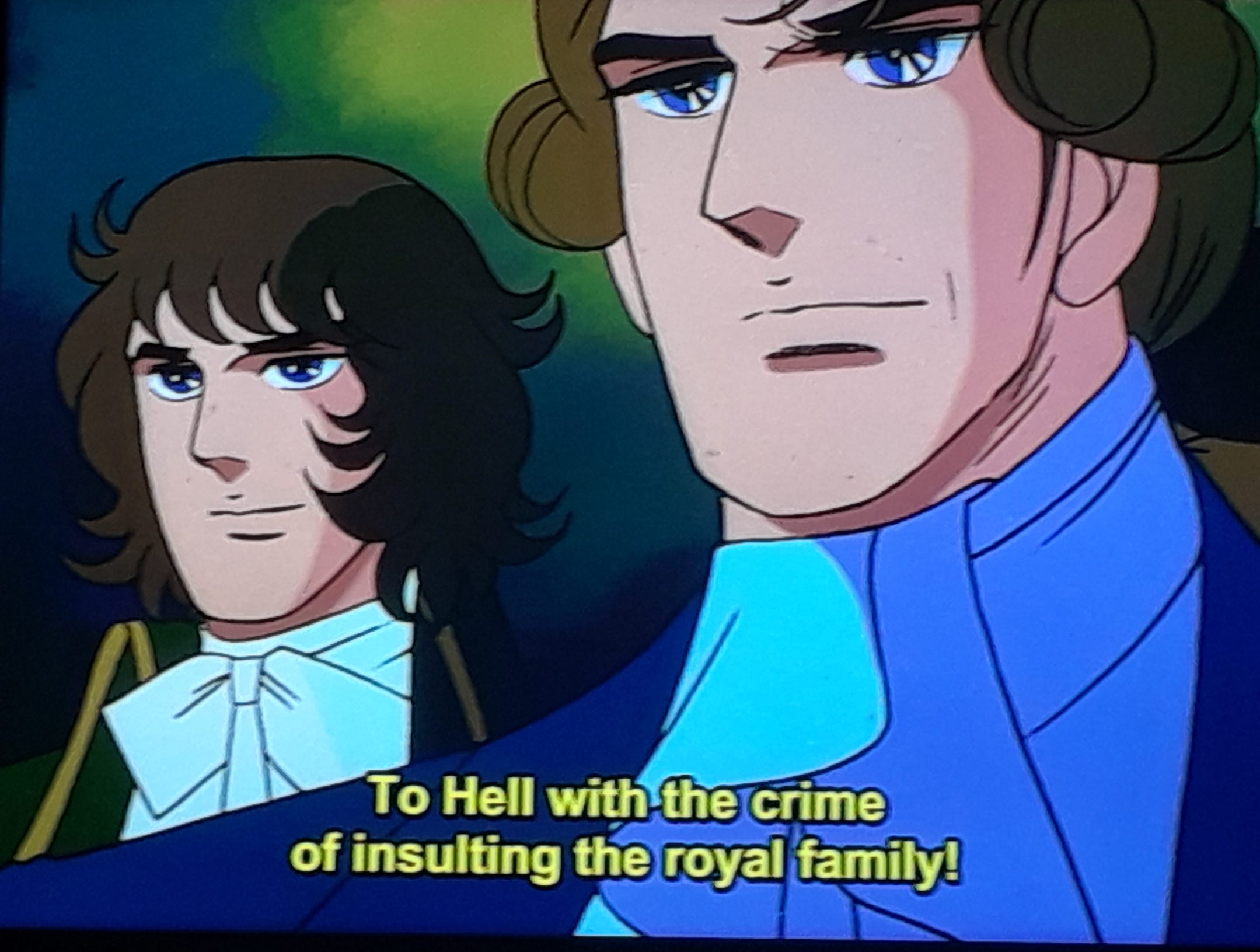
The image at the beginning of this posting is a fictionalized depiction of France, set before, during, and after the French Revolution, as part of the classic Rose of Versailles series which had a wonderful film later this year. It is relevant because the reactionary fascist regime in the U.S. would certainly love to impose a punishment on those who insult them and make it a crime. On that note, I’d like to say that this newsletter will cover: age verification laws, U.S. war on Venezuela, the importance of preserving knowledge, a spotlight on social activism, queer issues, and history, examples of resistance and recent victories, and final thoughts. Like I said in my last newsletter, if you would like to support me, and this newsletter, you can contribute directly to me here. Thanks for reading!
Foolhardy age verification laws

There’s been recent push for age verification, including a ban imposed in Australia on anyone accessing social media under age 16, known as the Online Safety Amendment or Online Safety Amendment (Social Media Minimum Age) Act 2024. Simply put, under this law, users in Australia who are under age 16 will have their accounts removed from TikTok, Facebook, Instagram, X/Twitter, YouTube, Snapchat, Reddit, Kick, Twitch, and Threads under the law. Platforms in non-compliance will face $49.5 million fines, even as Reddit is filing suit against it. X/Twitter originally said it would not comply but later changed course. The law is premised on the idea of “protecting” children from “addiction” and social media harm, with supporters surely pointing to a supermarjority of voters in Australia wanting to age-limit social media to those above age 16, indicating that these adults are fine with violating rights of the children they are socially obligated with caring for. Other countries have expressed interest in similar bans, like Malaysia, Denmark, France, Spain, New Zealand, Norway, and possibly the U.K. (which implemented the Online Safety Act earlier this year which has censored “entire forums, websites, communities and essential journalism”). The European Union also supported such a ban.
With millions of Australians losing access to social media, platforms are enforcing age verification, either through suspending accounts and keeping them in a sort of limbo for several years (if someone is age 13 for example). Those without accounts may move to darker parts of the internet, moving to unregulated digital spaces with fewer safeguards, with this law seen as a bit of a “test case.” Some will use virtual private networks (VPNs) to get around the requirements. Interestingly, sites such as Discord, Messenger, YouTube Kids, and WhatsApp are not included, although YouTube generally is. Users are being forced to verify their age via “live video selfies, email addresses or official documents” with the selfie apparently using “facial data points to estimate age,” through A.I.-powered systems. There are reports that Substack itself may comply with the law, considering it complied with the U.K.’s Online Safety Act, as noted by some in assorted postings.
Taylor Lorenz put it well in a posting for Team Zeteo: the draconian law will make kids less safe online. She noted one of the main groups pushing the passage of the law in Australia was “developing an AI tool to track students and was funded and co-staffed by a firm that was simultaneously making gambling ads”! This goes against the claim that the law will somehow convince kids to “the footy fields and netball courts” rather than funding recreation areas instead. Before the law passed, Google got a reprieve, after it threatened legal action (it may apply to search engines and be required by mid-2026). The law could lead to mandatory identify verification, network-level enforcement, mandatory filtering on all searches, and criminalization of bypass tools as VPNs. After the Australian law was passed, News Corp celebrated, claiming the news platforms are “true monsters” tormenting children, despite the filth and hate that Fox News spreads every day. To make matters worse, the Murdoch family (which owns News Corp), is “expected to hold a stake in the US version of TikTok,” as I noted in a previous newsletter.
Undoubtedly, the law infringes on the right of freedom of expression, access to information, and has massive privacy issues, considering the information that would have to be stored to ensure “effective” age verification. There are “questionable ways of storing personal and sensitive data.” As ReadOn noted, “verifying everyone’s age will require all users…to share sensitive personal data like government IDs or biometric scans with platforms or third-party verification services…[which] creates new vulnerabilities.” It will not, despite claims of some, “protect” children online. The law makes the state act in a paternalist manner, almost a parent of “bad” children, which is disturbing. Already, two 15-year-old Australians, of the Digital Freedom Project, are bringing a legal challenge against the Australian law, saying it violates the implied but not absolute right under the Australian Constitution which guarantees the “freedom of communication between the people concerning political or government matters.” It also violates the Article 18(1) of the International Covenant on Civil and Political Rights (ICCPR), which is not directly incorporated in Australian domestic law, saying that “everyone shall have the right to freedom of thought, conscience and religion,” and article 19(2): “Everyone shall have the right to freedom of expression; this right shall include freedom to seek, receive and impart information and ideas of all kinds, regardless of frontiers, either orally, in writing or in print, in the form of art, or through any other media of his choice.”
It further violates Article 13(1) of the International Covenant on Economic, Social and Cultural Rights (ICESCR) (“…education shall enable all persons to participate effectively in a free society, promote understanding, tolerance and friendship among all nations and all racial, ethnic or religious groups”), which Australia ratified in 1975. The age verification law goes against the principle of Article 18 of the U.N. Declaration of Human Rights (“Everyone has the right to freedom of thought, conscience and religion”) and article 19 (“Everyone has the right to freedom of opinion and expression; this right includes freedom to hold opinions without interference and to seek, receive and impart information and ideas through any media and regardless of frontiers”) as well, along with other rights. Others have said it will hinder the ability of young people to connect with others, and access online support, and learn about the world. It may lead to deepening mental health crisis among young people, especially those who are isolated, in a hospital, managing chronic health conditions, or disabilities. As disability advocate Ezra Sholl noted, it doesn’t solve the actual issues with social media, as platforms refuse to “delete accounts that bully, harass or cause harm.” Trolling and bullying will continue on unregulated apps. All of this has led some parents to teach their teens how to get around the restrictions.
Despite the above mentioned problems, U.S. lawmakers are continuing to push for age verification, along with a host of other proposed laws (such as the Kids Online Safety Act, the SCREEN Act, and the App Store Accountability Act). They claim these laws will make the internet more “safe.” In actuality, they will mandate the “total and complete surveillance of people’s online activities.” Taylor Lorenz of User Mag said that the laws denoted earlier in this paragraph would “censor LGBTQ and reproductive justice content off the internet, and any speech the government doesn’t like will be removed or blocked.” Lorenz further says that these laws are a gift to big tech companies, increasing the data these companies can harvest, while entrenching Meta and Google’s power. She calls upon people to stop these laws, and say no to “Section 230 reform and NO to online digital ID laws/age verification.” Lorenz has made similar arguments before, in other newsletters, noting that organizations, like Fight for Our Future, are opposing this legislation. She said these laws lead to pass censorship while restricting “young people’s ability to learn, express themselves, and connect” while it also “creates a pretext for censoring political dissent” and it “concentrates more power in the tech industry.”
As I noted in a previous newsletter, as part of a discussion about the Texas law, SB 20, which some have called the anime ban (and has already led to some censorship in advance as Mike Song noted),various states tried passing age-verification laws. Some have been declared legally invalid for now (Arkansas, California, Florida, Ohio, and Utah) and others have been legally challenged (Georgia, Louisiana, Mississippi, Tennessee, and Texas). Other states (Nebraska, New York State, and Virginia) have instituted requirements saying websites must have age-verification so only those over age 16 (or 18 in some cases) can view them. This creates, as I noted, “a restrictive internet system which violates people’s rights.” I noted states which rejected such laws, like Colorado and Vermont and those which have proposed similar laws (Alaska, Arizona, Connecticut, Idaho, Illinois, Indiana, Iowa, Kentucky, Michigan, Minnesota, Michigan, Missouri, Nevada, New Mexico, North Carolina, Oklahoma, Oregon, Pennsylvania, Rhode Island, South Carolina, South Dakota, and Washington State). I added that although Free Speech Coalition v. Paxton decision by the Supreme Court is a blow to “freedom of speech and privacy,” overturning precedent that protected free speech rights of adults to access sexual content online, it does not permit age verification for online “non-sexual content.” That shall be key if any of these age verification laws are brought before the reactionary court.
The U.S. War on Venezuela
When I originally started writing this section, earlier this month, I entitled it “Why blowing up Venezuelan boats matters.” At the time, I found an apt posting by Shaun King in his publication, The North Star, which I read all the time, about how these bombings are murder, plain and simple, along with others. Aalia Mauro said in her newsletter that Pete Hegseth should be impeached. Additional commentary said he should be charged with murder, that the regime is selling out an admiral (Frank Bradley) in order to shield Hegseth, and that his war crime will never be revealed for one reason: it is shrouded in an “above-top secret world,” as Ken Klippenstein put it. Apart from those who noted the illegality of the double-tap boat strike (and others like it), or saying Hegseth is a “complete psychopath,” what is missed is the fact that this strike shows how much the military has delegated to Joint Special Operations Command (JSOC), which Admiral Bradley headed from 2022 to 2025. Hegseth trusted him to make the “right decision.” Have we not learned from what the late Daniel Ellsberg wrote in his book The Doomsday Machine? He talked in part about how the power to deploy/use nuclear weapons has been delegated to low-level commanders, who don’t need presidential approval to release nuclear weapons, with similar systems in Russia and elsewhere. He even said that nuclear war itself is inevitable.
Beyond that, and calls for impeaching Hegseth, putting him behind bars, and their undoubted war crimes for killing Venezuelan civilians, there’s the hypocrisy of claiming the strike, and other actions, are motivated by stopping drug trafficking, when the former Honduran leader, Juan Hernandez, was granted a presidential pardon despite being “one of the most powerful, corrupt, and prolific convicted drug traffickers.” This was not only bribe-of-sorts encouraging the Honduran voters to return a narcotrafficker to power, but an act of blatant interference in Honduran elections. Since then, there have been allegations of monumental fraud and calls on the people of Honduras to unite against a U.S.-backed coup d’etat with the election still contested. The 28 extrajudicial strikes by the U.S. military in the Caribbean, since September 1st, have killed over 100 people, are not only atrocious, and illegal, but part of a plan to exercise U.S. control over Latin America. They go hand-in-hand with the unconscionable naval blockade of Venezuela, involving seizure of oil tankers, and designating the Venezuelan government a “foreign terrorist organization,” with U.S. naval deployments in the Caribbean. The latter brings in elements of the U.S. Air Force, Navy, Marine Corps, and Coast Guard, plus the CIA, FBI, DEA, and the compliant military forces of the Dominican Republic and Trinidad and Tobago.
Surely seizure of the massive oil reserves is a major part of this naked imperial aggression, as the orange one has said, like an “evil colonizer” as Shaun King described it and as David Callaway even noted. The latter can only be possible with regime change, which those like neocon Elliot Abrams have been pushing for. Peace activists Medea Benjamin and Nicolas J. S. Davies have said that the regime is only serious about peace if Marco Rubio is removed, noting that the orange one has delusionally said he has ended eight wars, as “his foreign policy is a disaster.” The U.S. is presently “mired in ongoing wars in the Middle East and Ukraine” and now the orange one is “careening blindly into new wars in Latin America.” Rubio has pushed for “crippling sanctions that devastated civilians, while openly endorsing failed coups and military threats.” Leaders in Europe and Latin American leaders denounced U.S. actions in the Caribbean, including against Venezuela. At the same time, there is good reason to believe that a U.S. invasion of Venezuela itself would be a geopolitical, and military nightmare, as some have pointed out. Even so, far-right opposition leaders like María Corina Machado have embraced an invasion, showing her complete compliance with imperial dictates coming from Washington, D.C. itself. The same could be said for the Prime Minister of Trinidad and Tobago, Kamla Persad-Bissessar.
People may ring their hands about the “authoritarian” or anti-democratic nature of the government in Venezuela, headed by Nicolas Maduro. As Joe Wrote said in a posting earlier this month, “ExxonMobil dreams of accessing Venezuela’s oil reserves…[and] the majority of Venezuelan oil is currently sold to China, and Maduro also provides oil to Cuba in defiance of the American embargo.” He further says that eliminating “the left-wing president would be a threefold victory for America’s imperialist government [by] enrich[ing] their business allies, restrict[ing] Chinese development, and further destabiliz[ing]…Cuba, which already struggles with rolling blackouts due to the embargo.” In April 2019 and spring 2020, there were failed U.S. coup attempts in Venezuela.
Joe Wrote noted that Maduro himself is a controversial figure on the left, with the Communist Party of Venezuela (PCV) backing him in elections in 2018, but split over whether to support him in 2023. Supporters argue it is “more important to stand with the disputed Venezuelan president than side with American imperialism, while the dissenters argue he has overstepped with state power and has embraced neoliberalism.” As such, there’s more nuance than than casting him as some “dictator.” Joe Wrote said that the Venezuelan government is “an authoritarian state,” but without censorship, it “would have been overthrown by the CIA long ago.” As such, he can “understand why the Venezuelan government recognizes [the]…situation for what it is — war — and responds accordingly,” with U.S. actions the reason “many Latin Americans prefer a strict central government that can protect them to a decentralized one that cannot.”
Preserving Knowledge
With everything that’s going on in the world today, preservation of knowledge is more important than ever. That is why I was glad to see opposition to the book purge/book ban in Tennessee which I noted in my late November newsletter. A coalition of 34 groups, ranging from publishers to literary organizations, libraries to professional groups (American Library Association), and others (like GLAAD, Authors Guild, and Comic Book Legal Defense Fund) opposed this plan, sending a letter to Tre Hargett, the Tennessee Secretary of State. According to the letter, they note that executive orders are not legislation and that Congress has not advanced a similar law, with no clear protocols for complying with the executive order (E.O. 14168), noting the constitutionality of this executive order has been challenged. They point to “the potential cost to taxpayers of the content review process…[with steep] legal fees…when patrons, publishers, and other advocates take legal action to prevent censorship” as Publishers Weekly summarized. EveryLibrary concurred in their own statement, opposing any “unconstitutional censorship, vague political tests, or destabilizing operational burdens.”
Around the time of my last newsletter, Rebecca Crosby and Noel Sims wrote an article for Popular Information. They said that Hargett’s directive applies to 181 public libraries in Tennessee, part of the Tennessee Regional Library System, that “covers most of the state except larger cities like Nashville and Memphis,” which are “reviewing their children’s collections.” Some libraries were “closed for days so staff could focus on weeding out prohibited volumes”! Prior to this, he declared that any libraries that “receive state and federal grants through the Tennessee State Library & Archives, which falls under his office,” also have to comply with his directive. Of course, as they note, it has not been explained how state law or the aforementioned executive order applies to books within the libraries. The state law he cited, the so-called “Dismantling DEI Departments Act,” already resulted in some colleges ending “certain scholarships related to DEI or restructured offices that provide resources to minority and LGBTQ students.” The law “does not mention library books” nor does the orange one’s executive order.
The article adds that removing books from public libraries, because books include LGBTQ characters is unconstitutional, and that in public libraries, “the First Amendment protections against content-based censorship are even stronger.” They hit the nail on the head with their statement that Hargett is “attempting to censor the idea that LGBTQ people are acceptable members of society” and is, by discriminating against people on the basis of their gender and sex, violates the Fourteenth Amendment’s Equal Protection Clause. As of yet, ACLU Tennessee has not released a statement about this, nor has the Society of American Archivists. I have messaged the first organization and plan to message the second one soon.
Otherwise, there were some articles of note about self-publication in nineteenth century Black literature in The American Archivist Reviews Portal (I have a pending article there) and more aptly, the posting in the free black library about the importance of physical media, with notes from the Radical Book Fair at the Auburn Avenue Research Library. Tables were said to be overflowing with “zines, abolitionist books, speculative fiction, and children’s illustration books about surviving capitalism, and finding family and community.” They serve as a meeting ground for those stories which “don’t make it to traditional bookstore shelves, the ones written in the margins or whispered between organizers, artists, and dreamers.” There was discussion about different areas of physical media, whether archival work with mix tapes and 8 track tapes, or connecting people through physical media like zines and films. The posting also mentioned a recent screening of The Watermelon Woman in Nashville, said to be a film which “can bridge the gap between isolated collection…and creative conversation.” I wrote about this film years ago, for The American Archivist Reviews Portal, saying in part:
The film follows the story of one Black woman’s determined effort to create her own history and connect with the past. Although this eighty-six-minute mockumentary is over twenty-six years old [now 29 years old], its themes of archival limits, power, silences, erasure, and fabrication continue to resonate today…Although Cheryl is not physically denied entry into the archive, the archivist exerts power over her by enforcing institutional rules. She ensures that Cheryl, and her Black female friend Tamara, are marginalized within the C.L.I.T. archive, even though both are lesbians…The Watermelon Woman simultaneously calls archives into question for silencing and erasing queer people while appropriating archival authority. Furthermore, the film suggests that people sometimes need to create their own history…the film emphasizes the importance of history-creation, especially in queer communities, which is as significant now as it was when it premiered.
The above-mentioned posting noted the importance of such gatherings, aiming to keep stories of Black people “alive and accessible, outside the gatekeeping of institutions, capital or traditional archives.” They said that “literature is still a tool—with sharp edges, still a weapon, still a balm,” adding that such radical book fairs have the reminder that “the act of reading together is an act of refusal: of erasure, isolation and of forgetting,” within a world which tries to sell “our imaginations back to us” while spaces like the fair “give them back freely.” That posting makes me think about the U.S. Supreme Court giving the greenlight for the orange one’s crimes allowing him, in this case, to fire the head of the U.S. Copyright Office, as contrasted to the Queer Archivist Code of Ethics, posted by Queer Archivist some months ago, with principles for ethical, liberatory, and trauma-informed queer archival practice, and people rescuing forgotten knowledge trapped on old floppy disks. As Black Lesbian Archives aptly put it, at the beginning of a posting, we are living in a moment where “the digital world is/can be erase with a single click. Posts vanish, accounts disappear, histories are censored.” At the same time we are seeing “the return of analog: typewriters, cassette tapes, vinyl, film cameras, [and] zines.”
Activism Spotlight
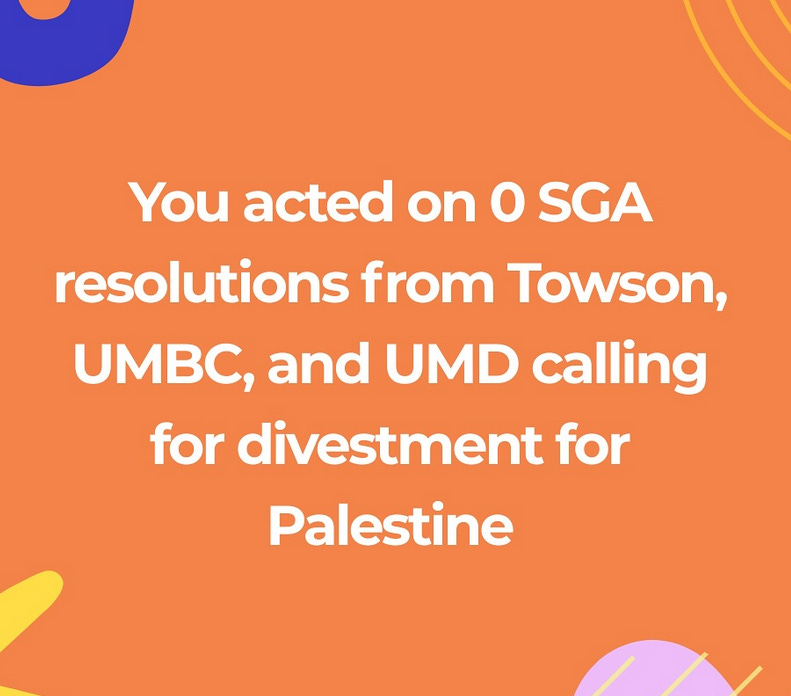
In this section of the newsletter, I plan to highlight activism and social movements. I’d like to particularly spotlight student actions at my alma mater, University of Maryland (UMD), where I earned by MLIS back in December 2019 and often went to National History Day (NHD) contests. Since then, I decided to only attend NHD completely virtually. UMD is the flagship school of the University of Maryland System, so what happens there could influence other schools. The Diamondback has been reporting on this throughout this year. Undoubtedly as a response to student pressure and action, the student government (SGA) passed relatively progressive and pro-Palestine measures, including a resolution in mid-September saying Nancy Pelosi and Steny Hoyer should not be welcomed at an annual luncheon to celebrate Women’s Equality Day because of their pro-Israel votes and comments. While Pelosi did not address the resolution directly, Hoyer did. He declared that said he was disappointed, and sneered that the action was “not…very welcoming.” Later that month, the UMD SGA passed further resolutions. One urged the university to acknowledge Israeli bombing/invasion of Gaza was a genocide and called for a ceasefire. Another said that UMD, and its charitable foundation, should implement boycott, divestment and sanction (BDS) policies in regard to Israel.
If that isn’t enough, in October, the UMD SGA passed a BDS resolution unanimously, angering some Zionist groups (like Maryland Hillel and Jewish on Campus). They claimed it was “anti-democratic” even though the resolution was delayed multiple weeks, the “SGA held two committee meetings on Monday and Tuesday where students could voice their concerns,” and proxy voting was available for those who could not attend in person. SGA executive vice president Riona Sheikh responded to scrutiny, noting that divestment legislation had been voted on Muslim holidays, adding it is “a clear act of racism and Islamophobia towards what is probably the most people of color and Muslims the SGA has ever seen. To misconstrue the SGA’s actions as antisemitism is obviously a desperate attempt to discredit a bill that simply condemns massacring innocent people.” In addition, this past April, students voted in favor of divestment in a campus-wide referendum. I talked about that, in a previous newsletter, noting that Zionist groups “bribed student voters with offers for ‘free Chipotle and Chinese food’ if they voted against the divestment referendum.” Those actions which failed because the referendum passed. I said the actions by Zionist groups showed “the pathetic nature” of these groups, and added that no one “should ever trust such groups and individuals espousing such an ideology which was once condemned by the U.N. General Assembly (in a vote by delegates representing millions of people across the world) as racist.”
Later in October, a vigil was held to honor Palestinians, promote peace for Muslims, and some community members called for action and advocacy to support Palestinians. Apart from the Turning Point USA watchlist which could threaten UMD professors and the over $136,000+ spent on “sometimes…harsh” event security measures on Oct. 7, 2024 (in part to protect Zionist students mostly, with criticism that this impugned on free speech), UMD’s president, Darryl Pines, acceded to Zionist complaints. He claimed that the SGA’s vote on BDS was not as “inclusive” or “accommodating” as it could have been, a clear method to discredit the vote. He further sneered that SGA “resolutions have no impact on university policy or practice.” In an act of clear repression, UMD police (UMPD) arrested two protesters and two student journalists for Al-Hikmah outside an event hosted by the Zionist group, Students Supporting Israel, featuring IDF soldiers.
In November, the UMD SGA unanimously passed resolutions condemning the aforementioned event, with a push to change university policy so “genociders or any more criminals” should not be on campus. They said that the SGA does not want to limit free speech, but that student organizations inviting speakers to campus is a privilege that should “be given to people who are not war criminals.” There were further articles, including one about UMD community members urging the university to increase protections for faculty researchers, which seems good natured but I wonder why people trust the university to do that. The SGA, for its part, reaffirmed its commitment to equity after allegations of racism, urged UMD to become a sanctuary campus, and filed complaints against the Zionist campus group, Students Supporting Israel. This is after that group called out the sponsors of a resolution mentioned earlier in this paragraph, falsely calling it an “IDF ban,” even though it does not constitute a ban. The group faced no consequences for sharing this misinformation. Lastly, community members gathered to honor the life of 2nd Lt. Richard Collins III (a Black male Bowie State University student murdered on campus in 2017) and the pro-A.I., pro-rapist, and somewhat anti-DEI civil liberties group Foundation for Individual Rights and Expression (FIRE), calling upon UMD to drop charges against student journalists arrested in October, as mentioned earlier.
All of this comes while the Israeli assault on Gaza continues, despite the “ceasefire,” on ordinary lives of Palestinians, and proposed legislation to send even more U.S. weapons to Israel, as Prem Thakker, Abdel Qader Sabbah, and Sharif Abdel Kouddous reported in postings here and here. Some students are continuing their in-person classes at Islamic University in Gaza, and elsewhere, despite the destruction, in an act of defiance. Others reported on the Israeli efforts to make the West Bank like Gaza, the Palestinians who had weddings even while standing on rubble, as Shaun King noted, Israeli military raids in occupied Syrian border villages in an envisioned demilitarized “buffer zone” stretching to Damascus, and the ongoing genocide with daily murders, mass graves, and starvation, to name a few methods. Simply, the genocide in Gaza has only changed form, and has not ended, as part of an effort to establish a permanent presence in Gaza. Apart from the despicable U.N. Security Council Resolution, which I described in an earlier newsletter this year, a colonialist plan under the U.N. flag, there are growing reports about how convicted sex trafficker Jeffrey Epstein was a foreign agent for Israel. He brokered security agreements between governments, part of his massive network of abusing women, while too many men profited and ignored what was going on. And now, the cover-up has begun.
Queer Issues Spotlight
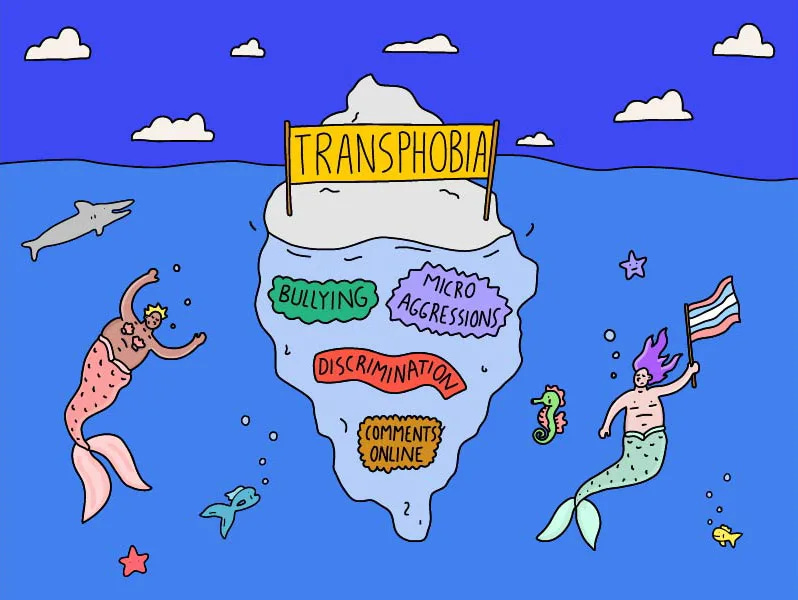
There’s many queer issues I could talk about, whether BBC disgustingly describing trans woman in transphobic terms as “biological males who identify as women,” trans women in state prisons who are being targeted by the regime, or the 300 FOIAs (freedom of information act requests) to track anti-trans policies. I’d like to first focus on trans people and how they are under fire. I have written about trans people, trans issues, and transphobia many times this year. In my last newsletter, I said that “the number of transgender characters on television has slightly increased from last year, but only four trans characters appear on series that have been officially renewed.” I further noted growing transphobia in the U.S., increasing efforts to villainize trans people by the regime, erasure of a trans character (and replacement by a Christian one) in Win or Lose, anti-trans legislation and legal sanction for bullying trans people, the regime’s transphobic passport policy, ending healthcare for trans veterans, Disney’s anti-trans actions, official efforts to erase trans history, and much more.
With all of that being said, I’d like to note some recent disturbing efforts. For one, Marjorie Taylor Green (MTG), in a final transphobic middle finger, before she leaves office on January 5th of next year, proposed making national care for trans youth a felony. It received a House vote, and it passed despite reported efforts by Sarah McBride, the only trans member of Congress to encourage her fellow legislators to not support it, with four Republicans (Brian Fitzpatrick, Gabe Evans, Michael Lawler, and Mike Kennedy) voting against it, but three Democrats (Henry Cuellar, Vicente Gonzalez, and Don Davis) voting for it. While the law hopefully has no chance in the Senate, as it is currently sitting in the Committee on the Judiciary, with no action since December 18th, as Erin Reed noted, were it not for Democratic defections, the bill would have passed. Instead, it passed by a vote of 216-211. This normalized “criminal penalties for standard medical care and setting the stage for further federal and administrative efforts to restrict transgender healthcare nationwide” and many people, rightly, “will view the defection of Democrats on the bill as a major betrayal.” Even so, defection of multiple Republicans “shows there could be some level of resistance to national bans among some in the party.”
The further efforts mentioned in the last paragraph include a proposed ban on healthcare for trans youth, through a federal rule which threatens hospitals by declaring Medicaid funding will be pulled. The ACLU pledges to challenge it in court. It must “undergo a 60 day comment period, whereupon the government must generally respond before it may be put into effect.” Anti-vaxxer-in-chief RFK, Jr. already attempted to stop trans youth care in hospitals, on a national level, before the federal rule even takes effect as s. baum noted. On the other hand, the Trans Youth Emergency Project has offered guidance to families to ensure that their children continue to get care even with the new rule in place, preparing to scale up their operations. All of these efforts come at the same time that groups have banned trans women, and girls, like the U.K.’s Girl Guilding (equivalent of the Girl Scouts in the U.S.), or the U.S. Tennis Association, plus efforts to ban new names and pronouns in Missouri schools even with parental permission. There are, additionally, continued Republican pushes for anti-trans measures within legislation in hopes of passage.
Such actions, along with others, are arguably part of what Willow Tabitha Kawamoto described as a global genocide of trans people. She calls upon governments to commit “to creating within their constitutions that will recognize and protect the rights and equality of all Transgender people.” As such, it should be clearly said that for one, trans people evidently have a right to exist, as Gillian Branstetter noted in a posting back in late September. They are not, at all, to blame for transphobia as Nico Lang noted, despite what powerful elites (like ex-president Barack Obama) say. They are the ones that experience transphobia. There are further reports about the far-right misogynnist and transphobic texts by Democratic Senator Ruben Gallego, and, more positively, a study noting that trans youth who receive hormone therapy are 70% less likely to commit suicide, with “only 7 patients of 432 discontinuing treatment.” The idea that such care is harmful is a baldfaced lie. Pertinently, there’s a report which punctures the “it’s better in Canada” idea: the government in Alberta is, according to Emma Paidra in Uncloseted News, using “many of the same tactics that were used to pass anti-LGBTQ bills in the Deep South”! Acting like Canada is so much better for trans people is deceptive.
There are so many more articles, and postings I could cover in more depth, whether about the viral essay scandal at University of Oklahoma is about trans people (since “the TA who gave the assignment and graded it is trans” making this, sadly, “another attack on trans people in positions of authority in academia” with the mom of the student who wrote the terrible essay “retweeting prominent conservatives calling for trans people to be banned from teaching!”), how hatred toward trans people does not deserve respect (I agree, it does not) as Transcend Discourse pointed out, or the silent suffering of trans men as Queer Resilience described in a posting in late September. Instead, to close out this section, I thought a little about Bari Weiss, who is the new regime-compliant plant who installed as the editor-in-chief of CBS News after the Paramount/Skydance merger earlier this year. Weiss is an avowed Zionist and a right-wing person who derides trans people. Yet, she is queer herself!
She previously dated Kate McKinnon (with presumably liberal viewpoints), and was with two men (Ariel Beery and Jason Kass). She has been married to a woman, Nellie Bowles, since 2018, a former New York Times reporter who is conservative and sneers about the left. They have two children together. Perhaps Weiss is like the Republican lesbians that Uncloseted Media profiled last month. In the posting, Emma Paidra described these lesbians as living within a lonely world, since most “queer women identify as Democrats,” unsurprisingly and justifiably. These Republican lesbians separate their identities from those causing the harm (predominantly Republicans). They are not afraid of losing their rights, and feel “unfairly maligned,” not understanding why people don’t trust them. It’s hard to say, when it comes to Weiss, but a small number of people have covered it.
Outspoken rightly described Weiss as a “Zionist and anti-trans queer woman…[and self-defined] defender of free speech, while Artistlike only briefly mentioned it, and Right Twice a Day called her a “Jewish Nazi-enabling Lesbian” (I’m not sure Weiss has publicly defined herself as a lesbian). Otherwise, in the beginning of a posting by James Duke Mason, he said that Weiss has “built much of her public persona around defending liberal values like free speech, individual rights, and… assume[dly] protections for the marginalized- including LGBTQ+ people- has now…spiked a hard-hitting 60 Minutes investigation into the horrific fate of Venezuelan migrants deported by the Trump administration to El Salvador’s notorious CECOT mega-prison.” As such, this mixture of identity and political beliefs is certainly worth discussing. The LGBTQ+ community is obviously not a monolith, and it never has been. After all, there’s those conservative Christian women who have came out as lesbians later in life.
History spotlight
I’d like to briefly spotlight some historical topics. There was a good article by literature scholars Alexandra Vasti and Raisa Rexer about how lesbians were found in 19th-century erotica, and wondering what we should make about “sapphic love depicted in early fiction and photography.” This was followed by other articles such as a posting by John R. Heckman asking if Ken Burns’ six-part documentary series, “The American Revolution”, will drive future historians, a posting by Kahlil Greene (interviewing Curtis Dozier) about why White nationalists are obsessed with Ancient Rome and Ancient Greece, and a posting by Jackie A. briefly talking about Ida B. Wells, a Black woman more people should know about, a woman who fought against lynching and for racial justice.
Then there was an article in Smithsonian magazine by Greg Daughtery about twelve failed constitutional amendments that could have reshaped U.S. history. He noted that while there have been 27 amendments since 1789, there have been nearly 12,000 amendments proposed to date, with “most proposed amendments d[ying] quietly in congressional committee,” a few sent on to the states for ratification, and six proposed amendments which are awaiting possible state ratification, about: the size of the U.S. House of Representatives, foreign titles of nobility, slavery (basically declared moot by the thirteenth amendment), child labor, equal rights for women (i.e. the Equal Rights Amendment, ERA), and representation for Washington, D.C. In his article, he highlights amendments that would have abolished the presidency, ended term limits for presidents, elected the president by a lottery, abolished the vice-presidency, added more vice-presidents, abolished the U.S. Senate, abolished the anachronistic Electoral College, created a court that would override the U.S. Supreme Court, limited personal fortunes, allowed U.S. citizens to vote on wars, and make war illegal. Many of these amendments would have surely changed U.S. history. There are definitely some amendments which should be passed which would improve the U.S. Constitution, as it is clearly an imperfect and flawed document. Even so, as the Amendments Project puts it, since the 1970s, “the U.S. Constitution has become effectively un-amendable, chiefly due to widening political polarization,” a problem with the entire system itself.
Lastly, there were interesting postings by Scandalous History. One focused on dangerous women of early England (Aelfthryth and Emma of Normandy) who “lived remarkably parallel lives” as both married “kings who had been married before. Both were accused, rightly or wrongly, of complicity in bloodshed” and both “fought to secure the crown for their sons.” Another two (part 1 and part 2) focused on the first woman to run for U.S. president: Victoria Woodhull. There were assorted other postings on the Lioness of Brittany, named Jeanne Clisson, the woman who ruled over the Mughal Empire, named Nur Jahan, and the pirate queen who fought the Qing Dynasty of China (Zheng Yi Sao, i.e. Ching Shih, commander of the Guangdong Pirate Confederation) and successfully controlled a pirate network which “brought the mighty Qing dynasty to its knees” and began as an “impoverished sex worker in a Cantonese brothel.” I don’t know if live-action or animated dramas have been made about this women, but if they haven’t, they should!
Resistance and Celebrating Victories
In this next to last section of this newsletter, I’d like to briefly talk about efforts to resist the awfulness that’s going on in the world, with a need to maintain collective strength as Lady Libertie noted. New York Attorney General Lettia James vowing to protect trans youth. In the biggest win after doctors who took the puberty blocker ban in New Zealand to court, the High Court asserted that puberty blockers are largely safe and reversible and imposed an injunction on the ban, noting that it was likely enacted unlawfully, “without time for ample public input; and that, until judicial proceedings are finalized,” authorities must take no steps to enforce it “pending the judicial review being determined.’” At the same time, Claudia Shienbaum, Mexico’s president, continues to stand up to the regime, as Ariana Jasmine noted, even though she may face issues next year, due to the undoubted intensification of the regime’s intimidation toward her, and Mexico.
There were further postings noting other acts of resistance and victories, such as:
Chicago Residents Fight Back ICE by Hosting “Whistlemania” Events
Illinois making historic moves to resist the regime
U.S. Supreme Court won’t hear Texas case on banned books
There’s an ad campaign trying to convince ICE agents to ‘walk away’
How resistance is everywhere but isn’t getting enough attention, a key post by J. P. Hill back in early October but still relevant
The BRICS (Brazil, Russia, India, China, and South Africa) said to be building the system that will replace the dollar according to Cyrus Janssen
Apart from this, there’s:
A federal judge deeming a blanket ban on gender-affirming care for incarcerated transgender people, in Georgia, as “cruel and unusual punishment” under the Eighth Amendment, a victory for “the civil rights of trans people across the country”
Artists are pushing back against use of their music by regime, such as Sabrina Carpenter, Olivia Rodrigo, Kenny Loggins, MGMT, and Blue Öyster Cult, while Taylor Swift stays as quiet as a dying church mouse
The story of a 95-year-old POW who wanted to return to North Korea to die, which could necessitate challenging propagandistic beliefs of what is going on inside the country, which are pushed by certain nonprofits for anti-communist reasons
Final thoughts
There’s multiple topics I could cover in this newsletter, whether about those countries which wooed the orange one with lavish gifts and what they got in return (meaning that U.S. foreign policy is for sale), how U.S. hostility toward Russia and continued NATO encroachment into Eastern Europe over the decades led to the war in Ukraine, the assertion that the Left has failed to provide an answer to the Ukraine war, the energy corruption behind the Ukraine peace plan, and the U.S. picking officials in Ukraine after the 2014 coup according to declassified documents. There were other assorted postings about the problem with A.I., why women are not as enthusiastic about it, and that more than half of the new articles on the internet are written by A.I. One very apt posting back from later February of this year, by Steph Fowler, LCPC, CADC, talking about why people are wearing masks in 2025. I’m one of those people! The pandemic is not over.
Rather than delving into those topics in more detail than the above mentions, I’m ending this newsletter here. The next current affairs issue may focus on the problems with A.I., black history, corporate and authoritarian consolidation, and feminism. Thanks to all who read this newsletter. I deeply appreciate it.
Happy December! I hope you all have a great rest of your week.
- Burkely
Blessings of the season. Thanks for linking to my article on the cognitive dissonance among the far right over rightwing antisemitism.
A note: Bari Weiss has claimed she doesn't want "political points" for her sexual orientation (The Forward - July 2020).
I would never mention Weiss's sexual orientation in order to award her "political points" of course. Nor would I do so to scar her with political demerits. I only mention it in the article to highlight the prima facie mental/moral illness of anyone with any human identity at all (other than that of bloodthirsty hate-mongering fascist) allying herself, in rhetoric and/or deed, with the goals of a flagrantly corrupt and avowedly, publicly antidemocratic, anti-human rights regime. In her case, she services two: the Trump regime and its symbiotic Netanyahu regime.
I am no journalist, though I work for a journalistic organization (Not The Media, producers of the This Is Hell! radio show and podcast). It is in my capacity as a left-wing satirist for that show that I say I don't believe people who enable the devolution of global discourse into chauvinistic totalitarianism should have sex, reproduce, or engage in pedagogy (I would never advocate denying them gender-affirming care, however). I find the idea of sex or any other social interaction between such people morally repulsive. And, like, gross.
Thanks for mentioning and linking to my piece in reasons people are still wearing masks! I’m honored to be included in such a valuable resource on such important topics!